Showing posts with label Drink. Show all posts

Wednesday, August 12, 2026

The table

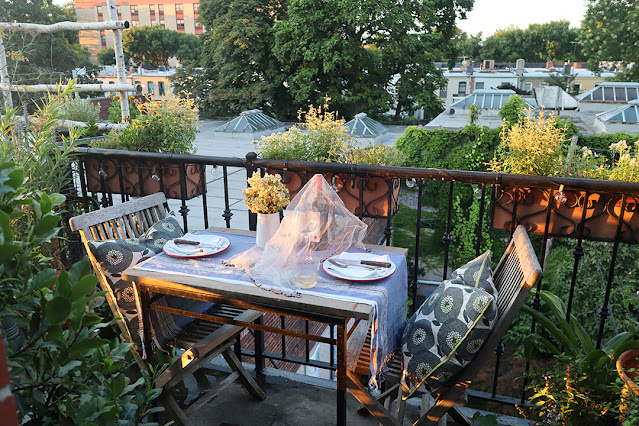
The terrace, these days. 

Here, waiting to be transported to Alice Austen House, the intimate museum, gallery and home on Staten Island of photographer Alice Austen (1866 - 1952), where I am now no longer volunteering but working (hey - I was working when I was volunteering) are a clutch of tall thimbleweed (Anemone virginiana - whose delicate white flowers on tall stems evolve into touchable green seedheads), and Penstemon digitalis 'Husker Red'.

The plants are from the Gowanus Lowlands Nursery, and are part of my long-term project to introduce more native and native-ish plants to Alice's garden and park facing The Narrows, that skinny and very busy bit of water leading to and from the Upper Bay of New York Habor and whose shipping traffic passes almost within reach of anyone standing on the shore. 

The drink is a gin and tonic tinted with a fermented strawberry-bee balm syrup made in spring. The glass a gift from my sister-in-law Brigitte, to remember our holiday together in Maine, many months ago.

There you have it. Summary on a table.

Thursday, July 2, 2026

Summer, bottled


Red? Scarlet? Rose? Pink? 

Today, in the luxury of 78°F air-conditioning (Central Park recorded 100°F, JFK 102, La Guardia 104), I strained and bottled two different batches of common milkweed flower vinegar. It is hard to describe, but it helps if you have smelled the heavy, lilac umbels of Asclepias syriaca. Wildly fruity-flowery and bracingly acidic on the edges of the tongue. Also a honeysuckle, multiflora rose, and elderflower vinegar, where the soft fragrance of the honeysuckle still lingers. I gathered the flowers in early June.

The vinegars began in large jars, the flowers mixed with sugar and tap water, stirred and allowed to fizz (these methods are in Forage, Harvest, Feast). At this point they are what I call cordials - sweetly concentrated, and naturally effervescent thanks to the wild yeasts at work. I serve them on picnics, diluted with tonic or chilled seltzer. Or booze, more rarely.

But because I sip and cook with vinegar more often than I drink sweet things, I decided to let them all ferment (much) longer, until acetic acid bacteria had produced the sourness that tells you vinegar has arrived. 

They are nothing like a commercial white wine vinegar, for example. There is acid, yes (their pH hovers around 4 - commercial vinegar may be 2 or 3), but also many layers of fragrance and sweetness and a sense of very ripe fruit. They are quintessential sipping vinegars, more like shrubs, made for quaffing on heat-blasted days like today: a tall glass, filled one quarter with the wild vinegar, ice cubes, and then water. Swirl. Quaff.

To the right (in the image above) is the black currant gin that has been steeping since last Saturday, when I pounced on the first - and not cheap - black currants at the Grand Army Plaza greenmarket. I'm going to use the leftover fruit, still packed with that musky, tart flavor, to make my favorite jam. 

There they are, from the other side. True color. Left to right: black currant gin x 3, the common milkweed vinegars x 6, and the honeysuckle-rose-elderflower. Times four.

Don Kirkwood gave me the bottle with my name etched on its side. I joked that one day his bottles and upcycled lab jars (more etching) would tell me who I was, one day. Maybe they will. I don't know where he found the time to do this. He was a kind, kind man. 

So there it is. Summer, its flowers gathered, their scents and flavors captured, and the sticky, intense heat reminding me of the time we lost Don, in his springtime in the mountains outside Cape Town, hunting for a flower that likes cliffs. Almost a year ago. 

_______________

Forage, Harvest, Feast

Sunday, June 21, 2026

Gathered flowers


This is June. Flowers and shadows. The longest days.

Linden flowers for drying, for later teas and toddies. Earlier in the month I included them in a fermented serviceberry/juneberry (Amelanchier) syrup. 

Daylilies, their bright petals added to salads. Soon, I'll pick the day-old limp ones to dry to add to soups, stews, sautés, and dirty rice dishes. 

And common milkweed in the back, now fermenting, too, in a simple solution of Brooklyn tap water and sugar, tinted deep rose-purple.

________________

Forage, Harvest, Feast - A Wild-Inspired Cuisine

Sunday, August 24, 2025

A tall, cool drink


Mugwort-raspberry hooch, cut with cold tonic water and piled with ice. In a pretty glass given to me by a Frenchwoman. 

I have cut back the Agastache, and the terrace-bees are cross, searching for what is missing (it's OK - they have plenty of basil, mint, fennel flowers, roses and citrus blossom to feast on). 

I'm hoping that it will flush again with fresh flowers in about three weeks. Mid-September. I'm not sure how summer disappeared, but it's on its way. Nights are noticeably longer and when we eat outdoors, the string lights come on.

(The luscious hooch is in the mugwort chapter of Forage, Harvest, Feast if you're curious.)

____________________

Forage, Harvest, Feast - A Wild-Inspired Cuisine

Tuesday, July 8, 2025

Outside


Hot days, hot nights, heat advisories. Turning on the oven seems insane, so if we're not eating cool and cold food, we're cooking outside on the tiny terrace. 

The charcoal is always Red Oak's lump charcoal, never briquettes; the firelighters I use (I am the braai mistress!) are the little chunks made by If You Care. The lightweight charcoal lights fast and burns hot, so one doesn't need too much. 


Lillet, seltzer, rosemary, ice. A drink to sip while watching the chimneys swifts on insect patrol above us. Every night there are more and more fireflies, and every night they fly higher, coming right up to the terrace to blink as we eat.

Friday, June 20, 2025

A tea to soothe sleep


Standing on the terrace recently I snuffed the air and smelled an unmistakable and welcome scent. Lindens were in city-wide bloom. Some still are.

Feeling besieged by the sense that the world is about to break over our heads?

Sip some linden tea.

Are the trees still in bloom, yet to bloom, soon to bloom, near you?


In New York, lindens are planted very, very widely. Littleleaf, bigleaf, European species, native North American species. 

Their flowers dry easily, and rehydrate gracefully. Linden tea has been used for a long, long time, to calm nerves, and soothe the sleepless. I am a convert.

Find the recipe and some gathering tips in my linden tea story for Gardenista.


Tuesday, June 17, 2025

Supper edition

Cool, grey, misty mid-June days and evenings have sent us back indoors for supper. 

Tonight's was a salmon oven-roast that we've fallen in love with and repeated many times. I first started cooking it in Maine, where we had access to superb - if farmed - Gulf of Maine salmon, and it has translated well to Brooklyn (with salmon farmed in the Faroe Islands; eating fish is...tricky, to say the least). 

The recipe is based on this one: spicy slow-roasted salmon, from The New York Times. I riff a lot with the spices, and often use berbere (the fragrant East African spice blend). And tonight's version included three tender, sliceable heads of spring garlic.


I was lucky to sip an exceptional 2020 dry Riesling this evening, from our friends at Storm Cellar, in Colorado. I treated myself to a six-bottle box of their wines, which arrived at our door last week. 


We had company. Pirelli enjoys salmon nights. He was a little impatient for the meal to begin.

___________________

Sunday, May 25, 2025

Cassis


I rediscovered a bottle of black currant (cassis, in French) syrup living in the back of the fridge. I made it in that briefest of black currant seasons, in 2023, by layering sugar with the pungent, musky fruit. The dark syrup forms quickly but I leave it in its glass jar for a week or more before straining it. The fermented syrup stays active and alive, so that's why it resides in the cold. Leave that chilled bottle closed at room temperature for even half an hour, and it goes fffft! when you open it. It lives. A delightful probiotic.

The flavor is deep and tart and sweetly intense. And here about a tablespoonful went into a Bombay Sapphire G&T. To be sipped on the terrace with the singing of the robins and the mockingbirds, the constant morse of the sparrows, the high chase-calls of the tilting chimney swifts.

(After the syrup is strained, the leftover black currants do not go to waste. It's either a black currant chutney, a jam, or dried fruit, as an imperative Step 2. In 2023 it was chutney, because I eat more of it than I do jam. At least, I did then. Things change.) 

Thursday, December 7, 2023

What and How to Eat Now

Here's a quick round-up of some seasonally appealing Gardenista pieces I have written. Follow the links to read: 

First up, Forest Toddies. On the cold-weather walks I lead, I sometimes make a hot toddy to warm frigid fingers. (It stays steaming in Thermos flasks.) It's alcohol-free but manages to taste grown up and complex. Everyone asks how it is made. My current hot toddy recipe is based on fresh apple cider, with the addition of citrus and herbs, a whisper of fir, and sometimes even a beneficial mushroom. 

When I've made the toddy and allowed all the flavors to infuse, it is strained and bottled, to live in the fridge. For the last month the Frenchman and I have been sipping a version of it (it welcomes improvisation) every evening, to see what life is like without a 6pm cocktail (no surprise, life goes on, without a hitch, but it's a useful experiment). But you can also drink it cold, shaken up with the hooch of your choice. I recommend bourbon. Good for parties.

Here is the Virgin Hot Toddy recipe.

It's yuzu season, and the aromatic, golden citrus are a highlight of my growing and eating year. Our own little tree had it's first proper crop this year (last year it produced three, I think), and it still has some plump fruit ripening on its branches. 

Yuzu are the essential ingredient for yubeshi, a cured, savory-sweet Japanese confection, intended to be sliced and nibbled with hot black tea. 

You can buy high-quality yuzu fruit online (they make a special gift) in the US from Flavors by Bhumi, New Jersey-based growers who also source unusual citrus fruit from other growers in the country. 

Are there still rosehips, where you live? They tend to become sweeter with cold. But sweet or astringent, here is my recipe for rosehip syrup. No boiling at all, just sugar, fruit, and time. The leftover hips make a very appealing candy-like snack, if they are large enough for the seeds to be scooped out easily.

What is the hardiest of citrus fruits? Clue: It is also the thorniest. Trifoliate orange, also called hardy orange, and more lemon than orange (very sour), and more yuzu than either (its skin is very fragrant). 

It makes a very good fermented syrup or cheong - transliterated Korean for marmalade, except the marmalade is is not cooked, and is traditionally stirred into boiling water for a therapeutic tea. The best-known cheong may be made with yuzu, but I use hardy orange in exactly the same way. 

Finally, dark afternoons, long nights, cold weather? We need bright colors and beneficial microbes to sustain us through winter. It's time to make fermented red cabbage (aka sauerkraut) with fresh juniper (Juniperus virginiana, but yes, you can use store-bought). 

The tangy kraut is good to eat as soon as five or six days (above) after the process has begun, and is then still very crunchy. I like it best around the three-week mark, by which time it has moved to the fridge...

Happy reading, and bon appétit!  

______________

Find me daily on Instagram

@marie_viljoen


Thursday, August 4, 2022

Time to drink the elderberry gin


Now that the new crop is ripening on shrubs around the city it seems safe to drink last year's elderberry gin! Why on earth did I wait so long? I usually make the gin with the elderberry pomace leftover from creating a fermented syrup. There is still plenty of flavor left to infuse the liquor. After that the elderberries can be used one last time: Pushed through a foodmill to extract the dark pulp, which I freeze to stir into soups, stews, and all the other outlandishly warm things that seem impossible on a 95'F day. 

Tonight's cold supper is a cold lentil salad vibrating with the flavors of onion, garlic, carrot, salted anchovies and vinegar. I'll top it with nine-minute eggs, halved. 

_____________

All About Elderberries

Thursday, February 10, 2022

Don't wake the lilacs


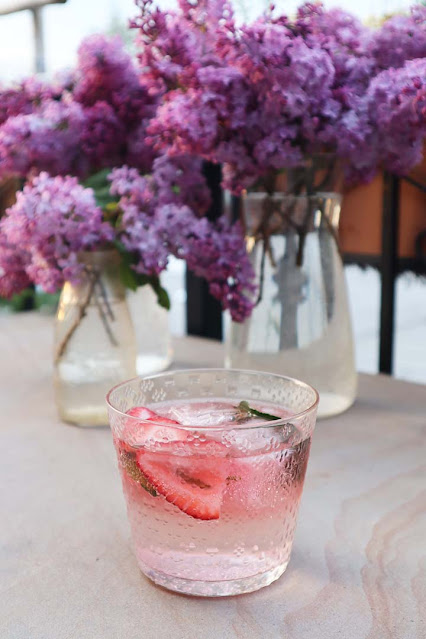
Clearly, this is not now. This is then. May, when nights are stretching the day all the way into bright June. Lilacs gathered from an abandoned homestead in the Catskills. A gin and tonic with lime leaves and strawberries. 

I must show this picture to our bedroom citrus flock, and whisper, "Two, more, months." This last stretch indoors is always the most problematic. The Meyer lemon has aphids on its flowers. That's a first. The black pepper vine (that turns out not to be a black pepper vine, but a betel, despite being sold as such by the grower) produced a mealy bug, which must have friends. The galangal has spider mite, and will be showered again, today. The yuzu has dropped some leaves but has a dozen fat buds.

For now the stone table on the terrace is the meeting-place only of mockingbirds, who come to eat fruit salad there every cold morning. A small dish of chopped fruit. This morning it was tiny cubes of apple and three raspberries. 

We may meet these lilacs again, in a green season. Now, they are covered in ice in the field in the old mountains, and fast asleep.

________________

Friday, January 14, 2022

What was, may be?

In freezing January it is helpful to look back at scenes of another life lived, just a few months ago. I am still sorting photos dating back to the middle of last year, and here are some good - and occasionally perplexing - moments.

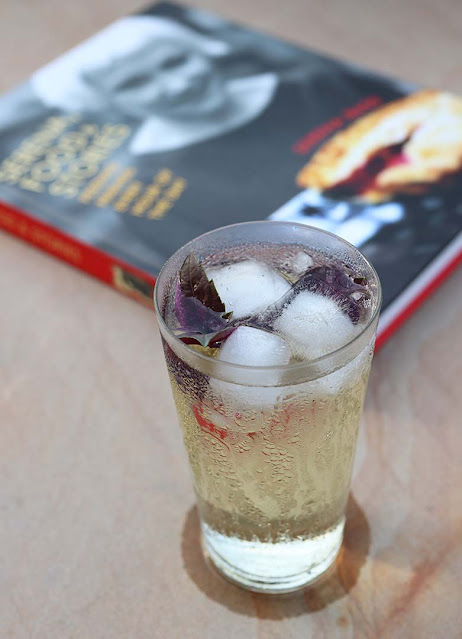
The aperitif - honeysuckle cordial and basil - sipped on the warm July terrace, with the book I just bought, written by a new friend, Serena Bass. We met through social media, before feeding each other at our respective Brooklyn homes. She is a chef and formidable cook (the two don't always go together, curiously), and a truly delightful human. One of the rare ones who makes you feel special, and consequently a lesson in How to be a Better Person.

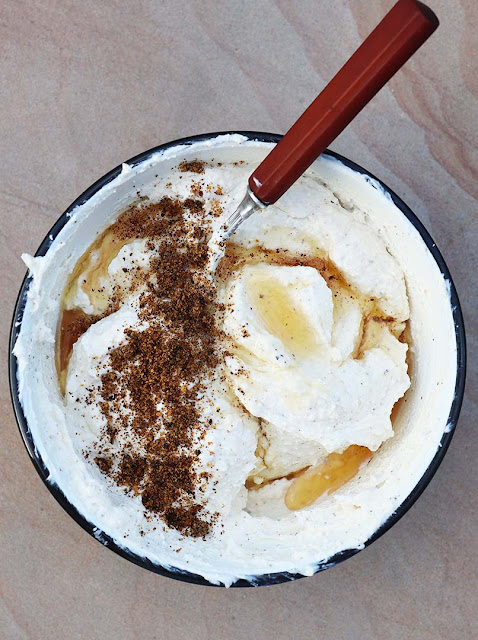
This was really perplexing. Looking at the photo I wondered...what is it? Sour cream? With garam masala? What's the golden stuff? Was it a marinade for a grilled supper? I checked the date on the digital file, checked my diary, and found a forage walk. Phew. Checked my emails, discovered the menu for the walk and... Lilac honey, cream cheese, full cream yogurt and ground spicebush (Lindera benzoin fruit). So that took eight minutes. It's slow going.

For the picnic we spread it on persimmon focaccia. Under mighty tulip trees, in an old cemetery. A good memory today, with howling wind, and grey-and-white light.


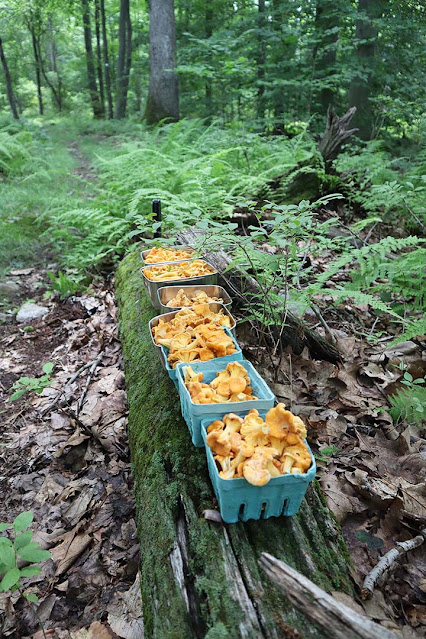
Also in July last year the Frenchman and I returned to the Hudson Valley woodland paths where we had stumbled upon a trove of chanterelles, in 2019. This beautiful green place was unreachable for the whole of 2020, while a massive COVID-testing site mushroomed (sorry) nearby and all access was shut down. We felt very lucky to find them again, and we stocked up!

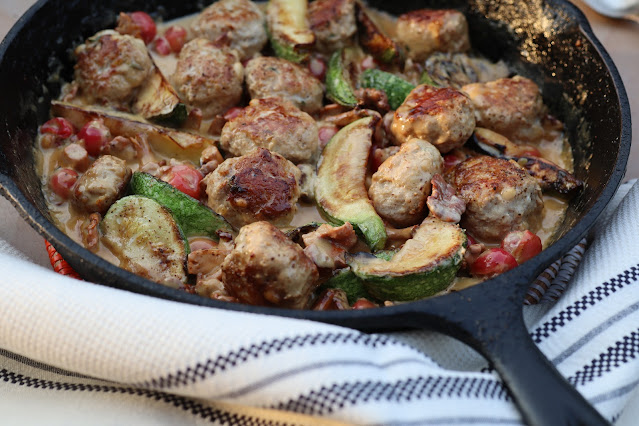
One of the meals I made with the chanterelles was this one, where meatballs studded with pine nuts cooked with the apricot-smelling mushrooms in a pan sauce of vermouth and cream, gooseberries and summer squash.

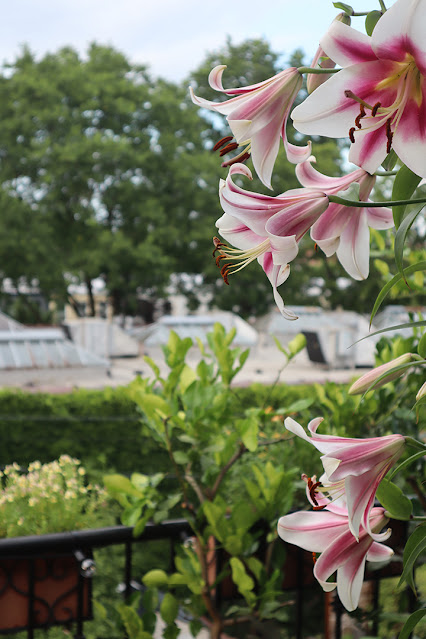
Summer means lilies. The Silk Road is statuesque, and I hope the bulbs will weather the very low temperatures we have just seen, and will experience again in a few days' time. They are very cold-hardy, but it's the frozen pots that pose the problem: the base freezes and prevents drainage. The bulbs can rot. Fingers crossed. They have grown in each of my four New York gardens.

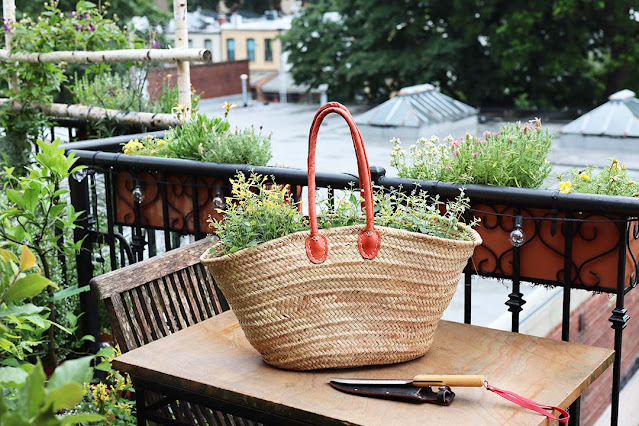
The windowboxes undergo seasonal makeovers, which gives me an excuse to shop for plants. These pretty yellow hyssops (Agastache) came from the Gowanus Nursery, and replaced the hard-working Nemesias (which are a South African wildflower; it always makes me very happy to see them).

Nemesias out (the cut flowers saved and on the table), Agastache in. On the left the flourishing bay tree (now indoors until April). 

_________

My Books

Friday, June 4, 2021

How to have a holiday


For me, much of the appeal of traveling - even a small distance - is to meet the plants that grow in the other place. (I can't imagine what it is like not to see plants, and perhaps people who don't, or can't, lead more focused lives?) And if some of those plants are edible, it is an intense pleasure to use them in the kitchen. It's an immersion in place and season. (Also, I just like to eat.)

So in coastal Maine bayberry (Morella pensylvanica) has featured frequently. Last night's dinner was a shepherd's pie, made partly to use up leftover meaty pieces that I'd braaied when a friend came over for supper (hi, Friend!), and partly to amuse the Frenchman, who adores the rustic dish. This time I added a lot of young bayberry leaves, still at that tender, chewable stage. And topped the ragú with stamped potatoes (because our cottage has no masher or potato ricer, so stamp, stamp, stamp).

Fir and spruce tips are still new and soft up here (as opposed to down there in New York) and so there is a batch of very fragrant fir salt drying on the wide table in the wide room with the endless, wide windows. Air-drying keeps the flavor better than oven-drying.


The benefits of car travel: you can carry heavy luggage home. So, vermouth. I always finish my vermouths with perfumed (edible) flowers, infused overnight in the wine I use for blending. That relatively brief soak captures their scent. And the countryside is covered with lilac bushes in bloom. Like clouds across the green fields.

For vermouth basics see the Mugwort Chapter of Forage, Harvest, Feast.

The longer infusions (in vodka) were forest-heavy: fir, spruce, hemlock (Tsuga, not Conium), as well as bayberry and a syrup of baby spruce cones (the pink glass). Into the wine they go, according to taste, and now it is bottled. Downeast Vermouth.


On a hike we found a massive lilac on an abandoned farmstead. The bush must have been 15 feet across and bowed down with flowers. So some came home, where I stripped the blossoms to infuse in honey I had bought at the side of the road from a stall that also sold eggs. No human in sight, just a jar for money. 

And yes, I bought eggs, too.

_____________

Find me on Instagram

@marie_viljoen

Wednesday, April 28, 2021

Catch it while you can


Spring. It's all happening so fast. Very soon, these Virginia bluebells will vanish from the late April woodlands and shady gardens (plant them where you have spring sunshine under tall deciduous trees that create summer shade). Kanzan cherries are about to shed their petals, crabapples have opened, dogwoods are starting. New York is in full bloom.

All that young garlic behind the bluebells on the counter has already been pickled, and the green apricots hiding to the right are now part syrup, part suppertime ingredient (last night they were cooked slowly with lamb, mugwort, pickled magnolia flowers and wedges of potato). The green apricot syrup is just sugar with an equal weight of apricots - their juices are drawn out slowly by the sugar and then ferment. A spoonful is wonderful stirred into a tall glass of cold sparkling water. Or added to the gin and tonic I sit and sip at six with the Frenchman. 

Or into this yuzu and lemon juice delight, beside my mayoral pick.

It's a year and two months and we have lived on top of one another for the length of a pandemic. And we're still okay. And still look forward to that evening ritual where we sit together and talk about what went on inside our heads all day, and watch birds, and plan outings. As of today we are both double-shot by Moderna. I was very sick after my second dose, he's fine. But being vaccinated against this beast that I never saw coming, and that I vastly underestimated a year ago, seems like a miracle. 

Inbetween, there have been walks, with and without forage picnics (Japanese knotweed and fava bean tartlets, above, on mugwort pastry).

And small but intensely precious escapes to a special spot in the Catskills. 

And there have been dandelions, I don't think I've ever seen as many dandelions. Leave them in your lawn - they are gorgeous. And course you can eat them, nose to tail. I've been including the petals in quiche fillings. Quiche is back. I've decided.

_________

My NYBG Class, 27 May 2021

Friday, March 26, 2021

The door opens...


Things change. The sliding door to the terrace sometimes stays open for hours, during the day. Some evenings are warm enough for drinks outside. The new pillow covers from Skinny La Minx have been slipped over the down pillows (the most forgiving pillows, ever - occasionally they have been forgotten outside in the rain, and then they dry right out again). 

The pots under the table are from Gowanus Nursery - owner Michele overwintered alliums in them and came to my rescue when I realized I had left it way too late to order those bulbs - sold out, everywhere. I will plant them next week so their first, premature leaves are not burned by a possible freeze. I really wanted the big purple balls for bees - they adore them. And, as usual, I have ordered too many lily bulbs for the space (when in doubt, squeeze). Those are from The Lily Garden, also as usual.

It's a garish drink, the Aperol Spritz: prosecco, Aperol, sparkling water and (blood) orange slices. But March deserves it.

The windowboxes have been sown with arugula and cilantro, and the violas are to keep our spirits up, in the meantime.

Some time in late April all the citrus trees will migrate back out to the terrace, along with the bay tree and the myoga ginger (I divided the myoga in fall, left one out and brought one in - to see if the outdoor one might make it). In May the sleeping sand ginger will follow. And two tea plants (Camellia sinensis) will arrive, too. 

I know, not much space will be left for humans. But we are good at sidling...

______

The Books

Thursday, March 18, 2021

Drink the season


Cocktail with sugar rim

I was tinkering recently with drink ideas for a walk. The advantage of smaller groups (10 people rather than 15) during viral times is that I can tote drinks more easily. Liquids are heavy!

This was a test that never made it to a forage walk, as everyone was happy to be served a seasonal vermouth - but sometimes someone doesn't drink and then I either include a no-alcohol variation, or make them all non-alcoholic. This rather delicious forage-inspired mocktail called on one of my fruitier vinegars, from last spring: wisteria blossoms! Spiked with spicebush, and cut with plain, cold water. Perfumed, tart, sweet, and very refreshing.

The catkins surrounding it belong to Turkish hazel (Corylus colurna). This year has been my first of noticing the fascinating flowers of hazel, and I was playing with their pollen. The catkins are male, and the tiny female flowers are separate, and a deep burgundy.

___________

Forage, Harvest, Feast

Monday, March 8, 2021

The journey to a sandwich

Snowbell flowers

In mid-May of 2019 I met a tree crowded with bees and panicles of fragrant flowers. Each bloom looked a lot like those of Styrax japonica (snowbell), but I had never seen them arranged like this, or smelled that intoxicating perfume. It was Styrax obassia, fragrant snowbell.  

Styrax flowers

I like to catch scents and flavors. And so after as much research as possible, I collected some of the flowers and decided to preserve them in the form of vinegar, fermented from scratch. Just flowers, water, sugar, and time. 

Styrax vinegar testing pH

After the first fizzing happened, and the flowers were strained out, I left the sweet, fragrant liquid in loosely covered jars to invite the lactobacter to do their work. They did, in a remarkably short time. The sweet ferment turned into a deeply fruity and complex vinegar in just four weeks. I bottled it.

Snowbell vinegar shrub

It is one of the best vinegars I have ever made, good enough to sip, which I did. Here it is in September 2020, with a dash of baby pine cone syrup, a lemon slice, and chilled sparkling water. Because of their depth of flavor (good) vinegars are ideal and healthy mixers if you don't want to drink alcohol.

Carrots in vinegar

Fast forward to last Saturday, as I prepared a forage picnic for 10 walkers. Carrots quick-pickled in the last of the fragrant snowbell vinegar. Destined for Wonder rolls - slices of crustless Wonder bread spread with chickweed and field garlic mayonnaise, and stuffed with the carrots, black radish and garlic chive flowers (I could write a treatise on my reason for making these with That Bread but we don't have time right now).

Forage picnic in containers

There they are, top left. Clockwise from there, watercress tartlets, black currant and juniper hand pies, and quails' eggs with a ramp leaf salt for dipping.

So if you'd like a sandwich in 2023, you'd better plan ahead. 

The next walk is What's that Bud? This Wednesday, with drinks and canapés, on a pretty-weather day in Prospect Park.

Book Here.

____________________