Tuesday, March 15, 2022
#18thStreetPollinators
Sunday, February 20, 2022
b255o? - I see you
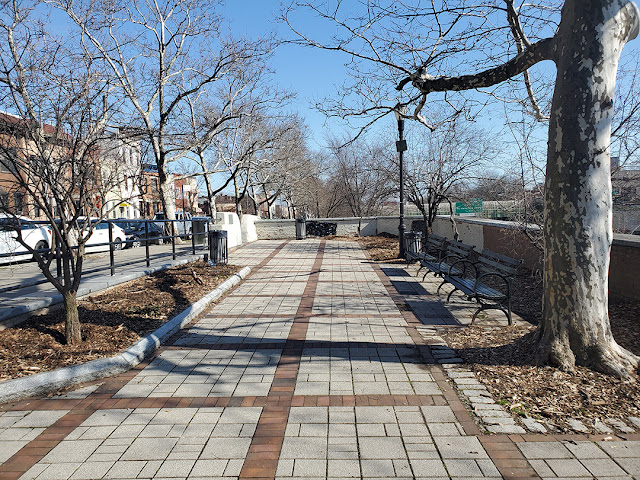
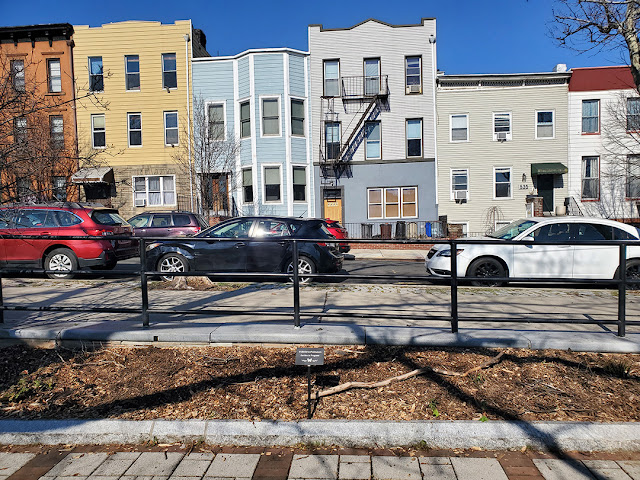
There is an empty park a few blocks from where we live. Its beds have been bare for as long as I have known it (just over three years). It has benches, but it is barren.
It could be a place where pollinators and people feel good. Some bee-watching and butterfly therapy. Maybe a hummingbird or two.
It is a fact of never-ending wonder that New York City's mayoral budget allocates less - less - than 1% to the NYC Department of Parks and Recreation. It's closer to 0.5%. And it's not just about plants and greening: the department oversees sports facilities, playgrounds, tarmac stretches of basketball courts, community centers, lifeguard training. The list is endless. Plants come last.
Pandemic budget cuts have left everyone deeply backlogged and worse-off than before. Nobody has time, staff, or money. Yet where did everyone go, flee to, during the last two years? The parks. For classes, for exercise, for meetings, for work, for birthdays, for school, for everything.
Parks are green jewels in this populous city's crown. Privately-funded conservancies shoulder the burden of keeping iconic spaces like Central Park and Prospect Park (and so very many more) in working order. But small, incidental parks like the one in my hood fall between the weedy cracks unless someone takes a keen personal interest in them.
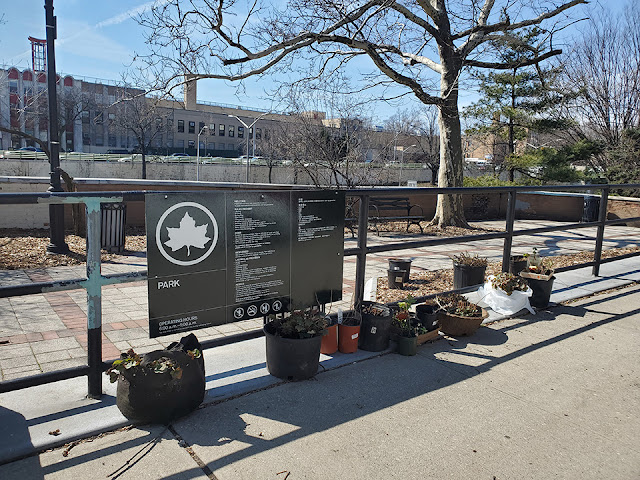
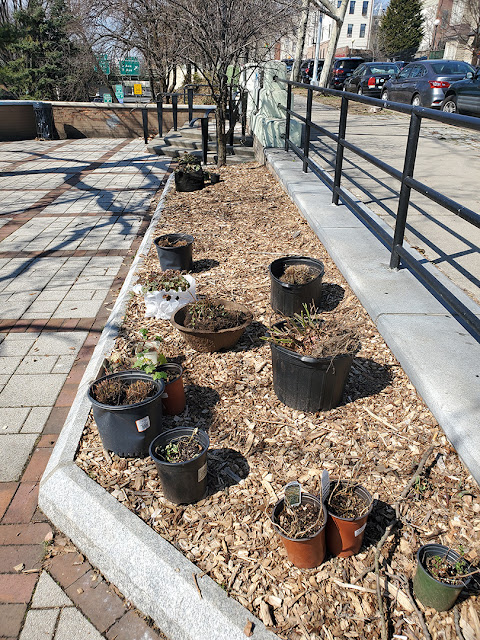
I discovered (that sounds quick, it was a meandering process) that this little park has an identity, but no name: it is b255o. It is a "sitting park". There's just not a lot of incentive to sit here. The fresh layer of wood chips may have been spread during its last inspection (December 2nd, if one looks it up). While I have approached the parks department and a stewardship program to see how we can formally initiate the procedure of adopting a park it will be a long time (I think) before I hear back. I did this all over ten years ago in Manhattan for a much larger, locked space; and that shuttered park is now an open, thriving space, but times change. It will take longer for the un-greased wheels to begin turning, in 2022.
So we're going guerilla. For now.
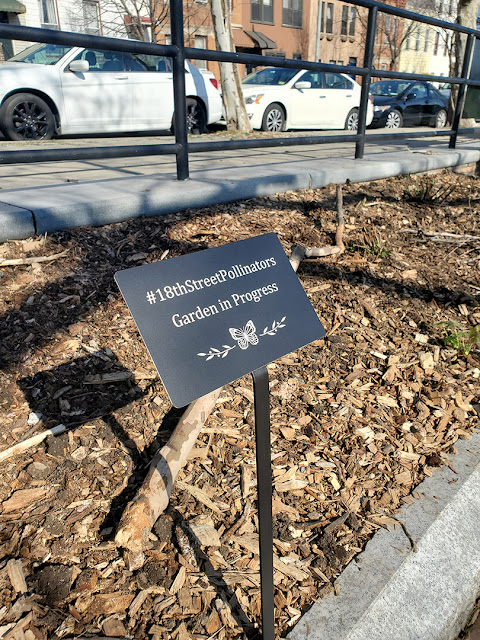
I'm holding my nose and jumping in. Which means I ordered 30 Allium bulbs and a sign to explain what's going on. Hoping it will attract some (welcome) attention and discourage dog owners from letting dogs in the beds. Making a commitment helps motivate myself, too. Two friends-through-my-walks have already offered their labor.
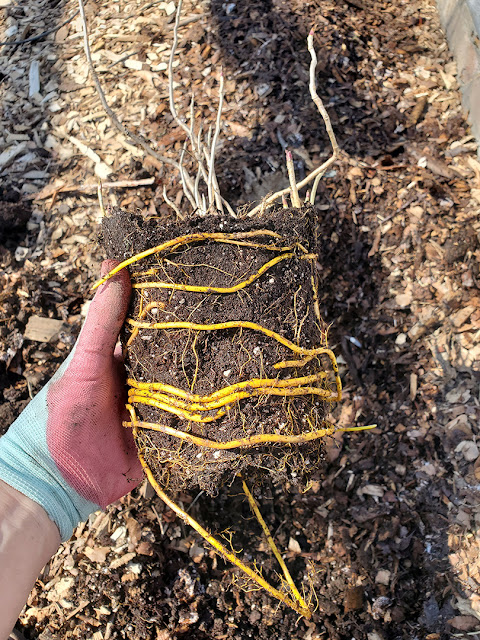
Now we just need, well, plants.
The demands on city plantings are high. They range from drought, to compacted or poorly draining soil, to pollution (dog pee and poop, salt, heavy metals), to theft by humans who want the plants for themselves, to old-fashioned stomping and crushing. So plant choices matter, and after that fingers must be crossed once they are in the ground.
The plants must tough enough for the climate, obviously (USDA Zone 7b). That's the easy part. But they must also be resilient enough to be able to grow without more than the occasional presence of a gardener, and especially, no supplemental watering: new plantings are vulnerable. So I expect setbacks and some teeth-gnashing.
As I think out loud here are some wish list plants that will hold up and become self-sufficient. Most are North American natives, but some are not. I'm thinking seasonal interest, benefits for pollinators and birds, and even some edible plants (in case someone is in desperate need of fennel fronds for their fish stew).
The space now is sunny, but in summer will be a mix of high, dappled shade, thanks to the plane trees nearby. The corner above will have direct sun. The choices below will evolve and will be influenced by what is available where, and when - these will hopefully be donations. Holler if you have some spare shrubs lying about.
B2550 Pollinator Garden
Shrubs:
2 Serviceberry (Amelanchier spp) - question mark; early flowers, midsummer fruit, vivid fall color
3 Black chokeberry (Aronia melanocarpa) - spring flowers, late summer fruit, beautiful fall color
3 Clethra/sweet pepperbush (Clethra alnifolia) - late summer flowers, scented, butterfly magnet
3 Dwarf fothergilla (Fothergilla gardenii) - mid spring flowers, vivid autumn leaves
3 Oak leaf hydrangea (Hydrangea quercifolia) - early summer flowers are a bee magnet, flowers persist through early fall, beautiful bronzing leaf color through fall
3 Rosa but what form and cultivar? - 'Knockout' is the municipal standard but the barren flowers provide nothing for bees
Perennials:
30 Alliums (ornamental, no-name brand) - tall, striking, disliked by squirrels, bee-magnets; acquired!
10 Anise-scented goldenrod (Solidago odora) - early fall flowers, pollinator-magnet, edible leaves and flowers
10 Bronze fennel - tall, gorgeous foliage, flowers for pollinators, leaves for butterfly larvae, self-seeding
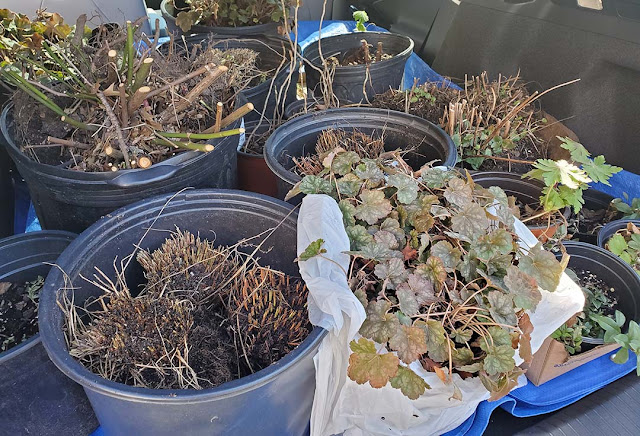
10 Foam flower (Tiarella cordifolia) - early spring flowers, bees love em. Native (I have babies that will make babies)
6 Hyssop (Agastache foeniculum) - long-blooming, bee-favorite, scented foliage
3 Milkweed - (Asclepias - not sure what species, yet) pollinator magnets, lovely flowers, showy seed heads
6 Ostrich ferns (Matteuccia struthiopteris) - sculptural, makes many babies, sequesters heavy metals
6 Thimbleweed (Anemone virginiana) - early summer flowers, attractive seed heads, disliked by pests
6 Mountain mint (Pycnanthemum virginianum) - fragrant, edible leaves, pollinator magnet-flowers in summer
12 Violets - spring optimism, fragrance, weed-smothering, self seeding
Annuals:
Jewelweed (native Impatiens capensis) - attractive to hummingbirds, bumblebees, self seeds
Nicotiana (N. sylvestris) - statuesque, scented, attractive to hummingbirds
Papalo (Porophyllum ruderale) - people-pleaser, purely to make neighborhood Latinex cooks and eaters smile
Perilla/shiso/sesame leaf (Perilla frutescens) - self seeds (too freely), tall, striking, fragrant and edible leaves, drought tolerant, appealing to everyone
__________________
Monday, October 12, 2020
Trash Forage - Prospect Park
I am organizing a different kind of walk for October 24th in Prospect Park: A Trash Forage. Instead of learning about edible plants, we will be helping the park by collecting the different kinds of trash people leave behind their sorry selves.
Please join me at 10.30am at the Wellhouse for two hours of trash grabbing-and-bagging, followed by a reward of cake.
Tickets to reserve your spot are $25 and will be refunded to you in full after the walk, assuming you attended.
We will be supported by the Prospect Park Alliance, the NGO whose unenviable job it is to take care of a vast public park that has seen unprecedented number of visitors during the pandemic. People have sought solace (and sometimes shelter) in the green space. At the same time the park has suffered unprecedented budget cuts by the City of New York. Even in normal times City funding of our public parks is shamefully minimal.
"Although City parks make up 14% of NYC’s land, the Parks Department receives only 0.6% of the City’s total budget," writes Molly Fraser, on the website for the NYLCV (The New League of Conservation Voters). That is not a typo. Zero point six percent.
She continues: "Urban forests support the City’s environmental health, filtering out harmful pollutants, cooling temperatures, and supporting wildlife. In NYC, trees filter out an estimated 1,300 tons of pollutants, save nearly $94 million in health costs, capture 2 billion gallons of stormwater runoff, and store 1.2 million tons of carbon annually."
And how do you quantify the therapy, mental and physical, that the park has provided during the COVID crisis?
The park has become everything to all people. Living room, bedroom, kitchen, work out area and yes, toilet. It needs help.
After we have filled our bags we will clean our hands (again!) and gather for the freshly-baked cake in a nice kumbaya circle.
__________
Sunday, September 20, 2020
Breezy Point - Backroads and Beyond
Conservation should be at the forefront of any administration's funding. Instead, it is a distant afterthought.
Thursday, September 10, 2020
The Park
Until two weeks ago I had never seen a chipmunk off the ground. Now they are elevated. Here's one eating the seed heads of statuesque Silphium perfoliatum, reached from a handy pin oak perch in Prospect Park.
Last week I saw a chipmunk chomping on spicebush fruit, hunting the ripe red drupes along the slender branches. I suppose they have always done this. But suddenly I am noticing it.
I walked in the nearby park with the Frenchman, recently. He was hunting migrating hummingbirds with a new camera lens (we found them). But before we did - in a patch of jewelweed - we visited Lookout Hill, where in late summer a small, fenced-in meadow is filled with the season's rough flowers: Joe Pye-Weed, a giant persicaria, golden rod, and daisies. I see this hill several times a week, because I run up it to counteract sedentary evils. But no matter how familiar I think it has become it always shows me something new.
The tall flowers were bobbing and bending with seed-eating songbirds.
On our walk home the baseball fields were filled with masked children and parents, warming up for complicated pandemic schooling.
The park is all things to all people. Now, more than ever. And that can get complicated. But most people are trying.
Our New York City city parks require New York City funding, and the local government has never been generous. And now the parks' budgets have been slashed. They rely on private funding.
The parks feed our souls.
And what is that worth?
Wednesday, August 5, 2020
Storm in, storm out
Sunday, July 7, 2019
Waterfront forage cocktails and snacks
Join me on a waterfront adventure at Bush Terminal - featuring wild cocktails and snacks - this Wednesday at 5.30pm.
When we moved to our (latest) new apartment we reconnoitred our new hood. And within its borders we discovered a park I had never visited, on the edge of New York Harbor. Since then we have returned, many times, for the salt air and the wide horizons.
In city terms, the park at Bush Terminal is new: it opened in 2014. It is a manageable size but seems much bigger because of its spectacular and big-sky views to the north (Manhattan) and to the west, across New York Harbor to the Statue of Liberty. The ship, ferry, and water taxi traffic is mesmerizing, and local waterbirds add a sense of discovery (I once saw an elusive green heron perched on a log in broad daylight).
Already, as is inevitable in this city, which underfunds its parks (if the park is in great shape that shape comes from private conservancy money), the designed landscaping has given way in many parts to weeds. Luckily, for our botanical purposes, lots of them are edible! There are also shoreline natives that speak to what our regional cuisine could be, if we let our culinary imaginations breathe. You will taste those possibilities in our picnic.
So on Wednesday we will explore this waterfront space, and finish with cocktails and a picnic inspired by the microseason (that would be the first week of July) featuring the flavors I have recently foraged in the Catskills, and from the remote green wilds of the city itself.
The menu is never final until the day, but the canapés will feature the scents and tastes of a wild botanical summer, including the flavors we have just met. I am thinking white sweet clover pastry, fava bean and common milkweed tartlets, yellow sweet clover mini-biscuits (fresh from that afternoon's oven), pepperweed relish (wasbai-ish), American burnweed and lime butter, and... some other things. And the cocktails of course. I'm leaning toward elderflower and wineberry for botanical base notes.
So:
Where? BushTerminal, Sunset Park, Brooklyn
When? Wednesday, 10 July, 5.30pm - 7pm
How much? $45
I will email you with meet up details once you have purchased a ticket. I can offer a few rides from Windsor Terrace, but the R subway goes to 43rd Street (a 10-minute walk) and there are two buses. Plus Citibike and Lyft or Uber, of course.
Thursday, February 26, 2015
Harlem winter
Most parks have been cleared well, but Marcus Garvey, beautiful in many ways, is also semi-derelict, on these upper levels. The people who come this high are occasional dog walkers, drug users, sex-seekers and purveyors, police (an officer was shot up here last summer), and those who fall in the cracks (...er, me?). So. No salt for us? Maybe they want we should fall and break or heads. Problem solved.
.