Crabapple season.
Birds prefer them after a real cold snap, when they are less tannic.
Crabapple season.
Birds prefer them after a real cold snap, when they are less tannic.
Every time I am here I feel this is it, this, here, this is the place, this is me, this is where I want to be. We sit on a rock for about an hour, with small forays up-river, and down. There are no trails. Just the water. The roaring.
I imagine camping here, and realize at once that I would be frightened, all night. The sound of the water drowns everything. I would not, could not, hear a footstep, a crunch on leaves, on soil, on spring or on winter ground. The squeak upon snow or the soft depression of spring humus. I rely a lot on my sense of hearing. This true white noise would cancel everything, and that's fine if you trust there is nothing else to be heard, but I do not trust. I am conditioned Jumpy. The Frenchman has spent nights on watch in extraordinary places because of my..."What's that!?"
For our hour we sit quietly and watch the water. We have known it - together, always - in every season except summer. Knitted in ice, the valley guarded by icicles five feet long and hanging from ledges. In early spring, the tender, first spikes of ramps in the brown leaf litter, branches still bare. Later, when the cutleaf toothwort and the squirrel corn and the violets are in bloom. We stay away in populous summer. We don't know what it might be like, then. Swimmable. In early fall when the narrow road is hemmed by jewelweed we have stopped to watch hummingbirds feast.
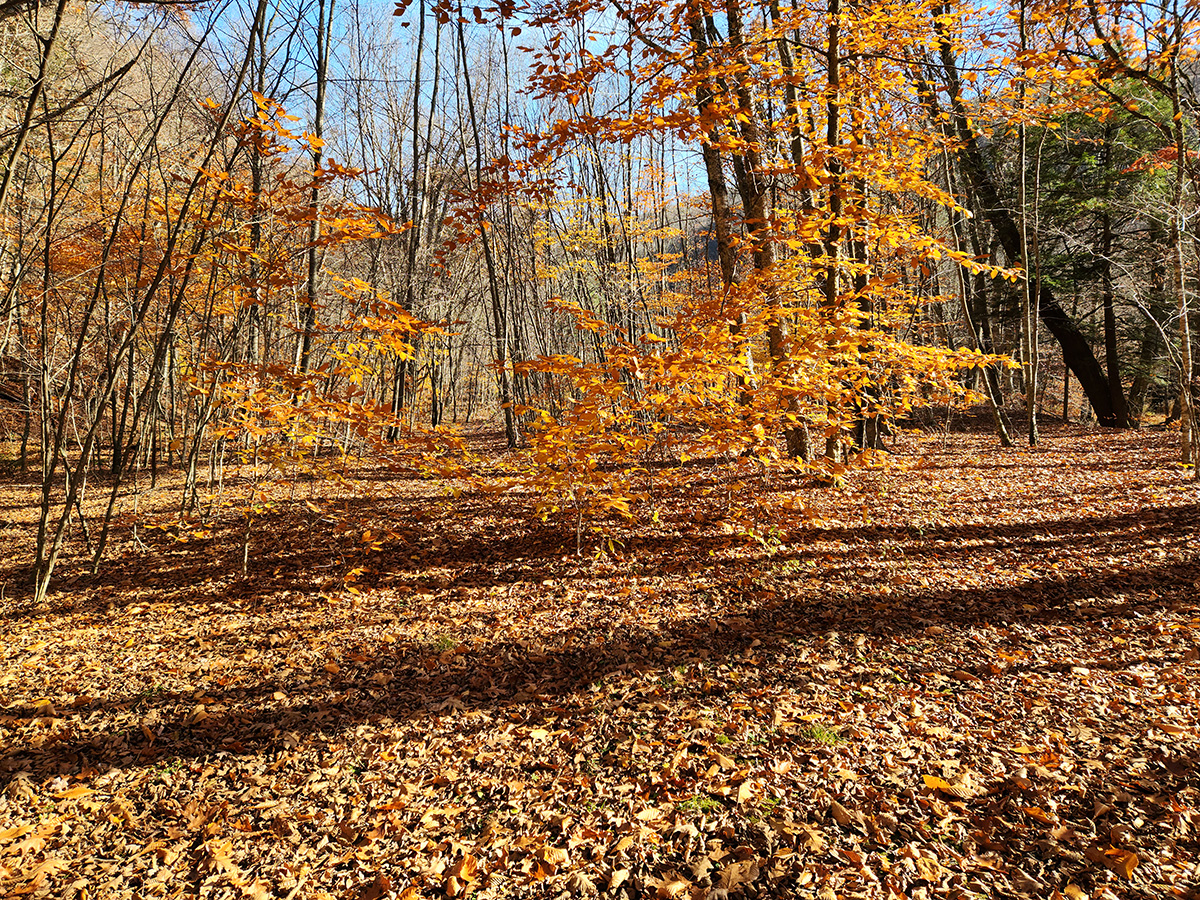
Here in the leaf litter of late October sleep foam flower, wake robin, rue anemone, violets, squirrel corn - the spring ephemerals.
___________________
Autumn is in the saturated Virginia creeper beside the opaque Gowanus Canal. The gray/grey cement factory behind it is one of the industrial remnants of the polluted waterway, now undergoing daily dredging (of the toxic gunk nick-named black mayonnaise) to the tune of many millions of Superfund dollars.
(I just fact-checked my glib millions. It's $1.5 billion.)
I have always liked the Gowanus Canal, even in its oil-slicked state. When I lived in Cobble Hill, to the west of the waterway (we now live east of it) I sometimes walked across the Union Street Bridge to Prospect Park, or to eat at Al di La, and would see schools of minnows jumping in the water at night, leaping above the reflections of lights, perhaps chased by a larger fish. It seemed incredible that life persisted in that sluggish and dark passage.
Red chokeberry (Aronia arbutifolia) grows here, too, planted in a small, un-maintained park that came very close to dying this last summer, through rainless months. Its neighbors are serviceberry and bayberry, black cherry, and linden. In June I like to lead walks here, when the lindens are in perfumed bloom and the serviceberries are ripe.
___________
Leaves are drifting down. The grass and sidewalks underfoot are a-crunch, crunch crunch. And the most generous of mushrooms is in season, loaded with flavor.
One of my favorite autumn recipes is up on Gardenista - a maitake and farro pilaff. It's really delicious.
_______________
November Walks and Forage-Picnics
One forgets how good pears can be. This farmers market Bosc sat on the counter for over a week, ripening. Then I sliced it, tossed with lemon juice and slivered myoga buds from the potted plant on the terrace, and added some chopped, roasted apricot kernels (they taste a little like almonds, and are from Ziba Foods, who source heirloom foods from Afghanistan). The fruit was creamily juicy and fragrant, the myoga buds spicy and floral.
Myoga is one of my favorite plants. It is completely undemanding. When its leafy stalks are long and lush in October, I begin to hunt daily for these rosy, crunchy buds.
I wrote about this hardy ginger for Gardenista, and you can read the article and get my two salad recipes, there.
___________
...are the ash trees. Fraxinus pennsylvanica. Their yellow leaves blaze.
We'll be celebrating New York's City of Forest Day on Saturday in the forest: Central Park's North Woods. And on the 16th, in the forest at the NYBG. Book here - there are some tickets left.
____________
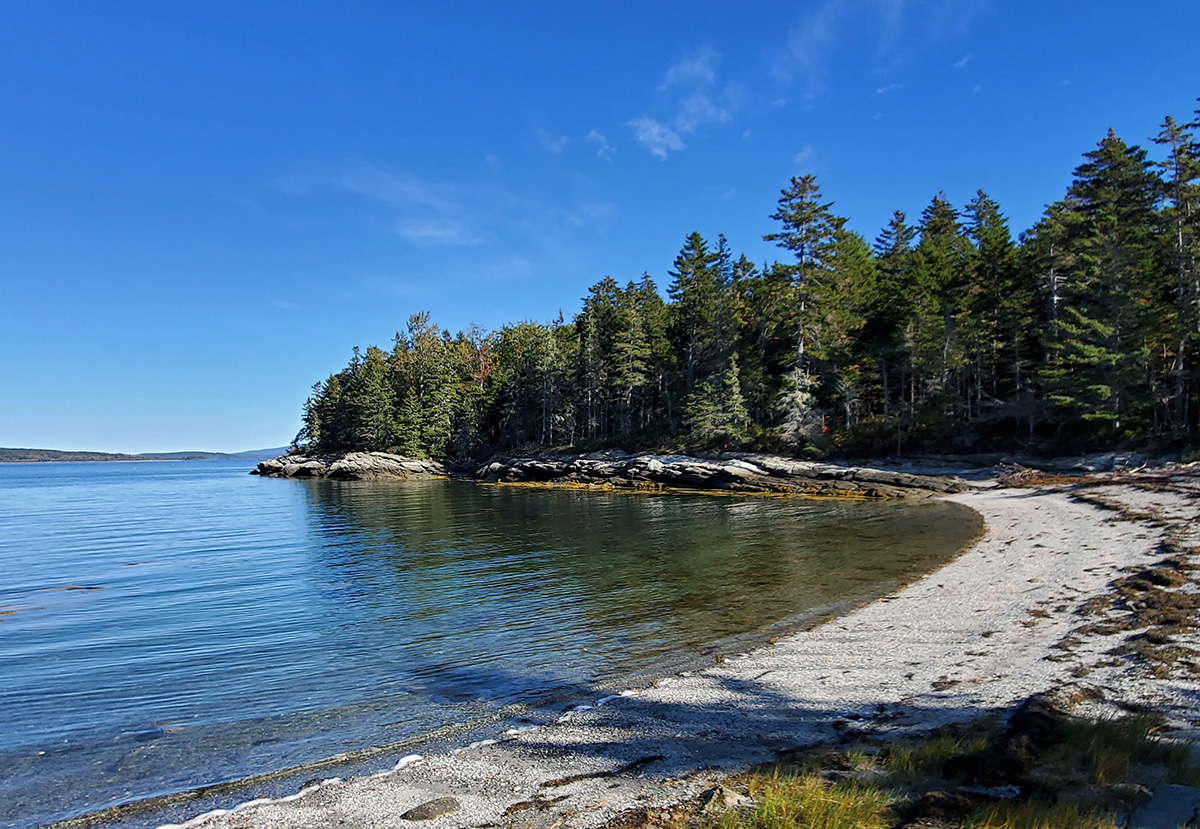
We arrived for a short break in Maine just in time for blue weather and sunshine.
The woods crowding right down to the water still awe me.
Sitting beside the clear water, hearing the small sounds as the tide moves massively and delicately in and out, is beyond price. A seal surfaces, breathing. An animal swims across the smooth inlet - at first we think it is an otter. But when it walks onto the island nearby it is clearly marten-like. It is a mink. And not in coat-form. Just doing its private mink-things, where it belongs. Later, in the woods, we see two porcupines in a maple tree, talking to one another
I don't know how to value these experiences. Watching the Frenchman, who has been working seven days a week for a long time, is like watching fresh life being pushed straight into his veins.
European sea rocket (Cakile maritima) grows on these pebbled shorelines. In New York we have the native America species, C. edentula. Both have horeseradish-strong leaves and young pods.
Under the trees, on springy soil rich with layers of fir and hemlock needles, we walk along small trails and pause often to look. At ferns, at bark, at mushrooms, at red squirrels.
Honey mushrooms, is my first thought. But the essential (if you're thinking about dinner or want accurate identification) spore print I take is tan. Honeys have white spores. They turn out to be a species of Pholiota, also edible. The other possibility is a species of Gallerina, which is exceptionally toxic. Mushrooming is always humbling. We didn't eat them.
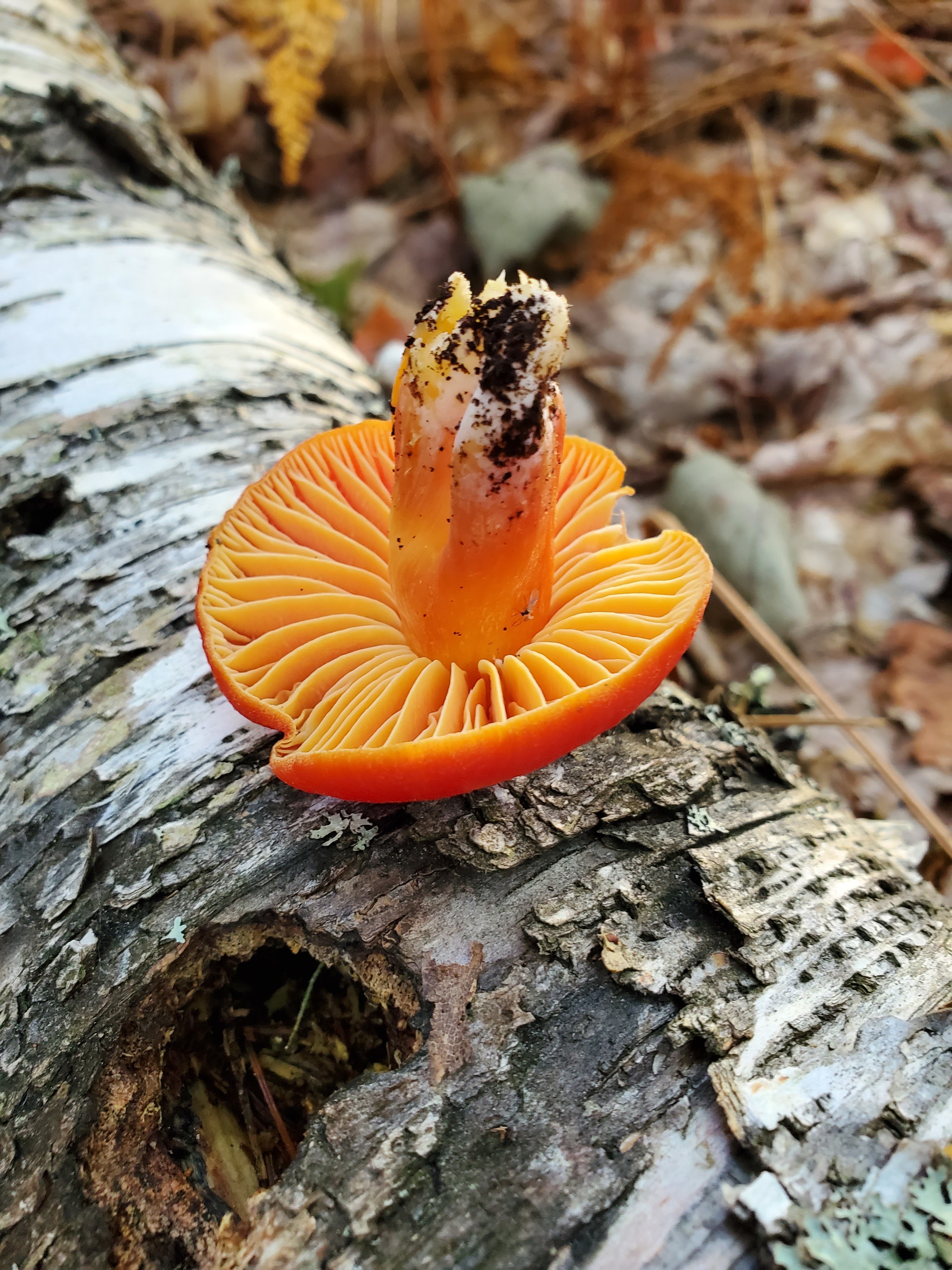
And a vivid Hygrocybe.
But it's all so interesting.
____________________