Showing posts with label Queens. Show all posts

Tuesday, September 27, 2011

Jamaica Bay and Broad Channel


The A Train out to the Far Rockaways; our destination, Broad Channel, in the middle of Jamaica Bay, once an island, now linked by railroad to Long Island (remember that for later). Then a twelve minute walk to the Jamaica Bay Wildlife Refuge.


Near the station every house says, Beware of the Dog. Every house has an American flag. 


One house has an American flag with a peace symbol where the stars should be. That house is a haven for feral cats, who seem to be fed and taken care of, there. Should I read something into this? Beware-of-the- Dog-lovers are flag-waving "patriots" and the one flaming peacenik likes cats?

I have seen more cats here than anywhere else in New York.


A five minute walk through these houses and then a right on the wide, Cross Bay Boulevard.


The air is salty. This is Queens.


The tide was out.


We headed towards the East Pond, separated from the West Pond by the Boulevard. This side is green and shady. 


Ampelopsis brevipedunculata - thanks to its pretty berries, the highly invasive porcelain berry.


Big John's Pond has a bird hide from which we took pictures and saw the Three Big Brown Birds that someone had been so excited about. They are black crowned night herons, I think. The pond was empty in August, the last time we had been here, pre-Irene, pre-Lee.


Beautiful and dangerous Toxicodendron radicans - poison ivy. Its berries are an important food source for birds. Some tough birds...


Parthenocissus quinquefolia - Virginia creeper twining up the stalks of reeds.


A lot of water on this side of the Refuge.


Below, on stalks about 12" high, tiny, tiny flowers - what is it? Very like Gypsophila...


White wood asters - Eurybia divaricata (formerly Aster divaricataare in bloom everywhere, now, growing in the shade.


Downy seedheads of....?


Summer's Eupatorium dubium (I think, dwarf Joe-Pye weed) has gone to seed.


Below, new to me, Agalinus purpurea, purple foxglove, as delicate as Campanula, growing in a boggy patch. Very pretty.


On the flower table is was labeled as Gerardia purpurea, apparently its old name


Just as well we had not planned on nibbling covertly at our leftover duck and pickled radish on brioche rolls here. 


Water level had risen...(and pickled radishes, while delicious, make the fridge smell very suspicious unless they are in a sealed jar. Just saying.)


Intimations of autumn, with egrets, across the water. Behind these trees is the train track. Behind the train track, the rest of Jamaica Bay, and then JFK.


Strongly twining American bittersweet, Celastrus scandens.

And then over to the other side. The wide open west.


I looked for the sea rocket (Cakile edentula) and found only one plant. Erosion seemed to have carried the others off, and I found no more. Not prolific. My seeds on the roof, sent to me by Lambert, have not germinated yet.


Golden rod time. Good flower guide time, too. There are many golden rods, Solidago species - and I need to sort them out. The leaves are key, as is the form of the flower cluster.


Asters, harbingers of fall. Don't know which one.


Autumn olives (Eleagnus umbellata) with juicily ripe (and mouth-puckeringly sour) fruit, which is very high in anti-oxidants; good for jams, jellies and fruit leathers (and mebos, in South Africa). The shrub itself is an Asian native and highly invasive, so knock yourself out picking the red berries. The rather drab flowers in spring smell delicious.


It was nice to see a mockingbird in a natural setting, and not on a vintage television aerial, sounding like a car alarm. He sat in this northern bayberry (Myrica pensylvanica) and swooped down to catch an insect before returning again to his spot.


The tides had eaten away at the shoreline.


And this git yelled at and chased the birds. I glared, hands on hips. 


The sand was littered with clam shells.


Remember the train tracks and the Cross Bay Boulevard linking this island to the world? That is how raccoons arrived in the previously raccoon-free Refuge. Apparently they are a menace, and decimate the clutches of eggs that the diamond back turtles lay every June and July. We had seen little wire baskets over the nest sites in August and speculated as to their reason as well as about their contents. We did not know about the turtles, then - they are our only local estuarine turtle. And raccoons think that they are delicious. We were disgusted with ourselves when Ranger Hallowell told us that the prints were raccoon. We were hoping for muskrat!


Rosa rugosa.


And another, beaten flat by wind, tough and persistent. 


It seems obvious, but its truth still surprises me - the better you know a place, the more you notice (if you are looking), and the more interesting it becomes. I had been slow to warm up to the Refuge. It seemed windbitten and harsh, peppered with poison ivy and invasives. But spring, summer and fall each peeled back another layer, revealing those orchids, a new wildflower,  ripe plums or a beach at low tide.

Each discovery has invited more.


We passed several slow cats on the way home and one house that said, Please don't leave your kittens here.

Interesting place.

Monday, September 26, 2011

Jamaica Bay's wildflowers


Now, about that little field guide I bought at the information center at the Jamaica Bay Wildlife Refuge yesterday and which I just opened it to start ID'ing some flowers.

There is no botanical Latin. Just common names, and just one common name per plant.

Sssssssssssteam. What a let down.

OK, I bought it in haste, and perhaps I should have read the title properly: Peterson First Guides: Wildflowers, by Roger Tory Peterson and Margaret McKenny. "First"...

But c'mon. You go to the trouble of producing a book with good illustrations and useful annotations, and all you give is a common name? That is awful. You're killing me, here. So now I see it is for "beginner naturalists"...But don't they deserve to know, too, that common names, while filled with whimsy and lovely for their own narrative value, are entirely fallible and not particularly useful?

Bother. This was going to be the flower post. It will have to wait.

Fortunately it only cost $5. But the anti-climax...


On a positive note, these wildflowers at the information center are what inspired me to whip the book off the nearest shelf. These were very impressive, simply because they were there. And, in retrospect, because the labels listed botanical as well as common names. Thank you. And putting them in found glass bottles is a nice touch...

Online, I'd had a brief exchange on the Gateway National Recreation Area's Facebook page with their administrator/s who had posted an image of some flowers being prepared for display. I had also asked whether there might be an online plant list available. No, said the administrator, but that's a great idea, we'll work on it! At the reception desk yesterday, I noticed a ranger's ears prick up when he heard me asking about the flower table. Turns out he is Lincoln Hallowell,  a ranger who flits between various parks in the area. In person he confessed that he had not realized just how many plants would be involved: over 1,000.  Well, start week by week, I suggested, and in a year's time you'll have them all.

The only plant list I have found so far is this one. Maybe they will find it helpful. I am still surprised that lists of flora are not standard issue in parks.

Anyway, I love this table. I would love it even more if they moved it to the highly visible, bright and airy main reception area, rather than keeping it in their conference room, where no one may find it. It is a wonderful resource.

Photograph: Johan Schumacher (image cropped for this blog, not original cropping)

Also in that room is an exhibition of photographs of birds, all taken in the Refuge, in all weathers, and which made the hard-to-impress Frenchie drool. The photographer is Johan Schumacher. There is an unforgettable image of a snowy owl, and snow geese. In the falling snow. (The rather cluttered and funky website in the link is not a good reflection of how beautiful the images in the exhibition are - see it if you can, in person.)

Orchids in Queens


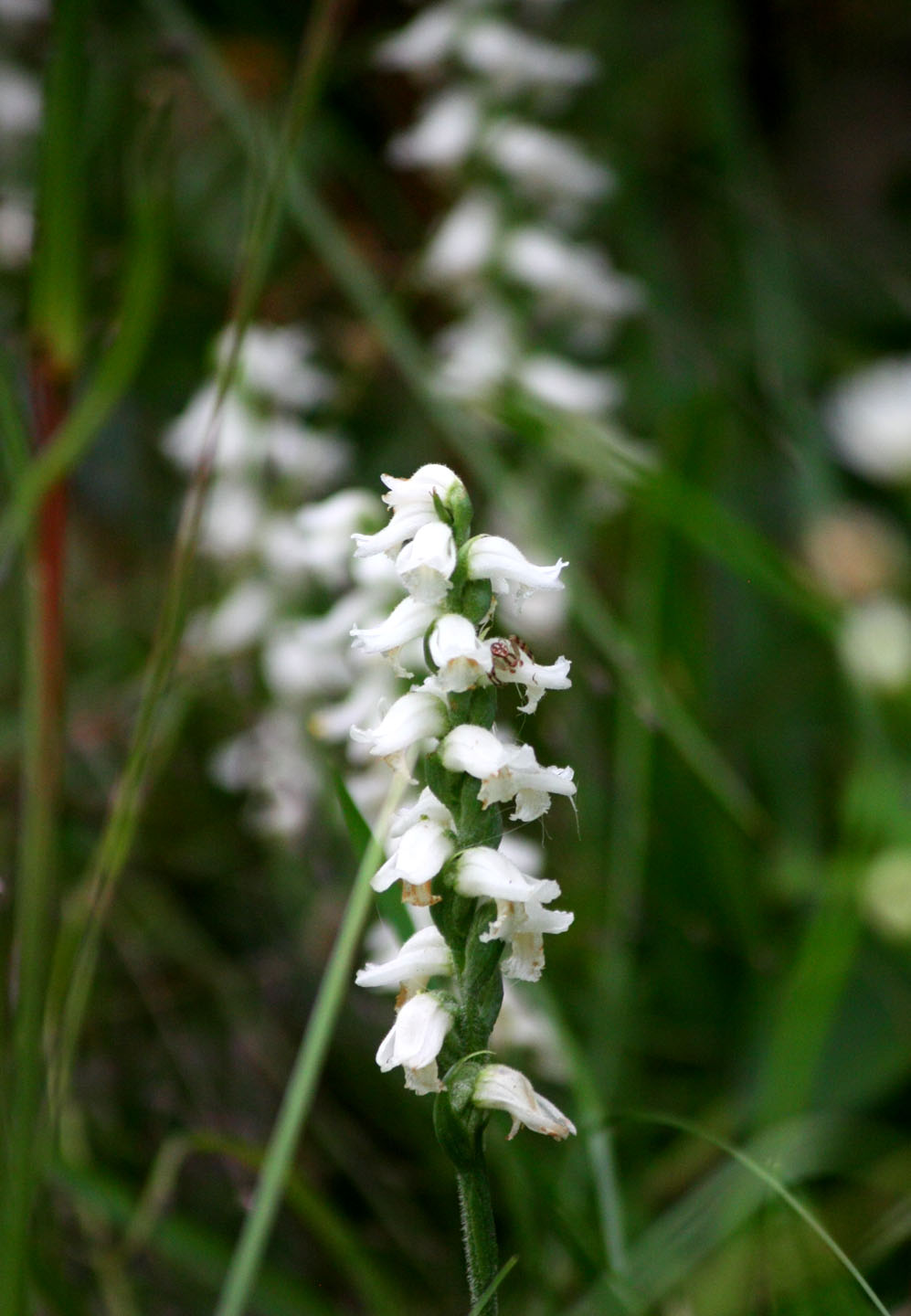
It is likely that the smell of burning Pumas hung in the salty air of the Jamaica Bay Wildlife Refuge for some time after I screeched to a halt in front of these orchids in a damp spot near a path. Slat my dood met 'n nat vis! That's Afrikaans. Interestingly, the English equivalent also involves fish: Holy mackerel! We saw some good things during our fourth visit to this preserve, but these took the cake. Or the fish. They made me very happy.


I did not know what they were, of course, except that they were orchids. Later, some web searching ("white orchids jamaica bay", "white native orchids", "september orchids", "orchids new york state", bingo) revealed that they are Spiranthes cernua, nodding ladies' tresses, indigenous to our eastern states and to extreme southeastern Canada. Not uncommon in the United Sates at all: they like roadside ditches. But! But, might I suggest, not something we ordinarily stumble upon in the course of our New York City lives. No. 


I felt very lucky.


One orchid was all on its own in the middle of the grassy path and Vince built a teepee for it.


Two people nearby were deflating their blow up kayak and oblivious to the flowers' presence. Earlier the male of the two had rushed into the information center in great excitement: We saw three big brown birds on the pond! What are they?

It seemed very funny at the time.

The ranger on duty suggested  that they might be ibis. I thought I might know what they were, but only because I had just read this blog.

More about the big brown birds, and the rest of our afternoon there, later. Some good stuff...

Wednesday, August 17, 2011

Jamaica Bay Wildlife Refuge


Not too much writing, I think the pictures say enough. I am waiting for some ID help with a couple of flowers so please sing out if you recognize something that I do not, or if a name looks wrong. 

Our last trip was in mid spring, and this late summer was beautiful. 

How do you get there? You take the A train. But of course. But in the other direction. Disembark at Broad Channel. Then you walk through a place like movies. Small, modest beach houses, low chainlink fences, clean streets, cemented front yards. Beware of the dog. Garden gnomes presiding over gravel. American flags. You walk some more to Crossbay Boulevard, take a right, walk... 

And then you are here.


Eupatorium dubium - dwarf joe pye weed. All of 3' - 4'.


So cranesbill-ish. Epilobium hirsutum, hairy willow herb (see comments).


Solidago. End-of-summer flower.


Hibiscus moscheutos - swamp rose mallow.


This is New York City.


I mean, you take the subway...


The body armour of one of dozens of washed up horseshoe crabs.


At last, a live one.


A black skimmer.


? [8 July 2020: Pluchea odorata! Saltmarsh fleabane. Searched for two hours for the same plant's ID after a recent visit, and stumbled...on my own blog, and the image above, which I had completely forgotten about, having combed through this botanical list, first. Thought the flowers resembled Ageratina altissima, so in the Asterceae family, now knew it had a strong smell, and...phew.]


Very invasive and pretty loosestrife.


? Very aromatic leaves. Lamiaceae...


Northern bayberry, of course. Time to collect the ripe berries.


And beach plums - Prunus maritima. Big smile. And delicious. Two of the bushes I remembered from last year had been hacked back, but...hacked. Just sawn off. It was horrible. Who did that? Curious. Three others were dripping with ripe fruit, and guarded by a large Canadian goose.

I ain't scared of no goose.

There's a great plant list here and no doubt I'll find what I am looking for when I go through it carefully. Later.